Showing posts with label Lord. Show all posts

Sunday, August 21, 2016

Julien L'or dit Lamontagne: Act Inacheve (Unfinished Act)

Today I am reviewing some the the L'or or Lord lines in our families and found a void. A real void, that is, there is an empty space where there should be writing. A parish register from  "The Registers of St.Jean-Baptiste, Port Royal, 1702-1755 has the name "Julien L'or" written in the left hand margin but there is absolutely no writing!  For those researchers familiar with the style and format of the French Catholic parish registers of Quebec and Acadia, this is a glaring error.  For those reading this story who are unfamiliar with this format, I can only tell you that the dear Cure Charlemagne Cuvier may have tied one on the night before. The empty section occurs between the 17th of February and the 3rd of May, 1724. It must have been a long winter!


Who was Julien L'or anyway? Julien was an early habitant in Acadia, not one of the earliest but he arrived before 1675, probably from France and may have been in Quebec before his arrival in Acadia. Besides being the progenitor of the Lord family, he was a 6th great grandfather of Al, Claire and Ray Rivet and through a marriage also an ancestor of Dorothy Wills. He was born about 1652 and married Anne-Charlotte Girouard about 1675.  Julien and Anne-Charlotte had nine children and the Rivets descend from two of those children, Pierre L'or and Marguerite L'or. Al, Claire and Raymond Rivet's grandmother was Marie Lord, daughter of Solomon Lord, born in St. Jacques de l'Achigan in 1854.

Julien L'or and Anne-Charlotte lived and raised their family on the western side of the River Dauphin, slightly northwest and across the river from Port Royal. In  the 1686 census of Port Royal Julien and Anne-Charlotte are listed as 33 and 26 years old with 4 children: Alexandre 10, Jacques 8, Pierre 5, and Marie 1 year old.  Cattle and sheep are not enumerated on their entry. On this map, you can find their domain:


and the detail...


It is possible that Julien was buried in the cemetery of the church of St Jean Baptiste in Port Royal, present day Annapolis Royal, Nova Scotia. With a blank entry, who knows exactly what occurred to Julien when he died.  Could he have drown in the River Dauphin and his body never found?

In July, I had an opportunity to walk through the oldest section of the St. John Baptiste cemetery guided by Alan Melanson on the Acadian Ancestral Tour. Julien L'or's remains may have been close by and under our footsteps....even though he has a blank entry in the place where his burial should be recorded!


Here is the line from Claire, Al and Ray Rivet, siblings born in Cohoes NY between 1916 and 1922, who were the children of:
 Paul Emile Rivet 1880-1961, born in St Jacques de l'Achigan, son of 
  Marie Lord , 1854-1914, born in St Jacques de l'Achigan, daughter of
   Solomon Lord, 1827-1913, born in St Jacques de l'Achigan, son of
    Louis Thaddee Lord, 1784-1858, born in St Jacques de l'Achigan, son of
     Jean Baptiste Lord dit Talaron, born 1761 in exile in Connecticut Colony, son of
      Louis L'or, 1722-1781, born in Port Royal, Acadia, son of 
       Pierre L'or, 1682- 1738, born in Port Royal, son of
        Julien L'or dit Montagne and Anne-Charlotte Girouard


Thursday, April 23, 2015

The Lord Family of St Jacques de L'Achigan, Quebec


Last month I took a chance based on a hunch. I bought a book through Abe Books. It wasn't cheap, especially considering it is just a paperback - $85 with the postage from Canada.  It smells a little musty which I don't mind. I am quite at home with with the smell of old musty books. The book title is Le Bas du Ruisseau Vacher by Therese Melancon-Mireault.  It is the story of the eleven founding families of Acadian exiles who were deported to Connecticut and Massachusetts and eventually settling the village of St Jacques de l'Achigan in the seigneury of Saint Sulpice in 1766.  Interestingly, many of these exiles traveled from New England to this new promised land via the Hudson-Champlain-Richelieu WaterwayRiver. (That's more than slightly ironic because their descendants emigrated to this area years later).  The exiled Acadians called this new land "Nouvelle Acadie".  The eleven founding families were:
Amirault or Mirault
Bourgeois
Fontaine
Gaudet
Granger
Jansonne
*****Lord *****
Martin
Melancon
Richard
Robichaud

If you read this blog in past years, you may recall the Lord family are ancestors of the Rivets of Cohoes New York.  Maxime Rivet married Marie Lord in St Jacques de L'Achigan on 11 October 1875. Twenty years later they can be found in Cohoes, NY with most of their children including Paul Emilie Rivet, Joseph "Joe" Maxime Rivet, and Armand Rivet.

Le Bas du Ruisseau Vacher actually has a family photograph of Marie Lord's parents (Salomon Lord and Marie Auralie Gagnon) and her adult siblings. Marie is not in the photograph perhaps because she and her husband, Maxime Rivet, had already emigrated to the USA.


The bearded gent in the center is Salomon Lord, father of Marie Lord, grandfather of Paul Emile Rivet and great grandfather of Joseph Albert Rivet, Claire Rivet Yetto, Raymond Rivet. Salomon is also the grandfather of Louis and Harvey Rivet of Cohoes.

Seated on Salomon's right is his wife Marie Aurlie Gagnon.  She is the grandmother, the great grandmother and the great great grandmother, etc to the descendants of the Rivets of Cohoes, NY.

I wasn't expecting to find a photograph of ancestors in  Le Bas du Ruisseau Vacher.  Though I paid through the nose for this book, I can tell you now it is priceless!


Below is a recap of the stories written about Acadians in this blog so far.  This list includes some early posts that may not have been well researched but I am reviewing them for accuracy and hope they will "make the cut"!

Saturday, March 31, 2012

More Mapping the Route: Québec to Cohoes, Waterford

I am fascinated when I think about how French speaking Quebecers made their way to the Cohoes area in the 19th century. Essentially all the ancestors on this blog: Mylott, Allard, Glode, Rivet, Beauvais, Bissonnette, Guertin (Yetto), Hamel, Lord, LaCasse, Kagle, Guay and St. Hilaire made their way from somewhere in Quebec to the Cohoes - Waterford - Troy area. The powerful waters of the Mohawk River falling over the Cohoes Cataract and the thoroughfare the Hudson River provided made Cohoes and Troy an industrial hub where textiles, iron axes, and brick masonry were manufactured and iron foundries flourished.  Cohoes offered employment - steady employment to French Quebecers whose large families exhausted land resources.  During the 19th century these families poured into mill towns of New England and upstate New York.

Many of the ancestors families of this blog came in similar fashion and similar times and others came in somewhat unique circumstances.  Let's take a look at some of the families, the ancestors and the routes they may have traveled to upstate New York.

TRAIN: Solyme Beauvais and Adele Guay left St Cesaire, Rouville,Quebec and arrived in Cohoes between 1862-1870.

TRAIN: Moise Bissonnette and Julia Kagle came from St Jean sur Richelieu, Quebec and arrived in Cohoes between 1844-1849.

TRAIN: Maxim Rivet and Marie Lord left St Jacques L'Achigan, Quebec and arrived in Cohoes about 1895.

TRAIN: Dedace LaCasse and Marie Louise Amireault came from Joliette, Quebec and arrived in Waterford  about 1898.

TRAIN: Jean Baptiste Guertin, later John B Yetto, baptized in St Hyacinth, Quebec in 1828 was living in Troy by 1860.

TRAIN: Louis St. Hilaire and Elisa Paré from St Patrice de Sherrington/Napierville, Quebec went to Cohoes about 1892.

TRAIN: The parents of Malvina Hamel, the stepmother who raised Claire, Al and Ray Rivet, were Joseph Hamel and Charlotte Josephine Lambert who came from St Cesaire, Rouville, Quebec to Cohoes between 1867-1868.


and the English speaking ancestor....
TRAIN: After emigrating form Cornwall, John Albert Berryman Wills and his wife, Anne Reed, made their way from the area of the Huntington Copper Mine in Bolton, near Lake Memphremagog, Quebec to Port Henry on Lake Champlain between 1868-1870.  It is likely the first part our their journey was on the Canada Pacific Railroad from Newport, Vermont to St Albans, then continuing on the Rutland & Burlington to some port on the eastern shore of Lake Champlain, Vergennes, where they ferried to Westport and Port Henry in Essex County.


Depending on the time period, the trip on trains could be grueling or very grueling!  Quebec families who flooded New Hampshire, Massachusetts, Connecticut and Maine, often traveled the Grand Trunk Railway.  Those who came to Cohoes and upstate New York in the 1850s and 1860s need to negotiate a different route, one that was indirect and perhaps more arduous due to possible transfers in Burlington Vermont, again in Rutland Vermont, Whitehall NY, and Schenectady or Saratoga NY depending on the time period.

Online maps are available that can clarify passenger train routes which disappeared long ago or were taken over by D&H.  Below are just a few from 1849  demonstrating the lines between Rutland, Whitehall and Saratoga.  From Rutland it was possible to make a connection to the Saratoga & Washington Line running to Whitehall, Saratoga Springs, Ballston Spa and eventually Cohoes OR the Troy-Rensselaer & Rutland Line that ran from Castleton, Vermont through Rupert, Cambridge, White Creek, Eagle Bridge, Hoosick to Lansingburg.

 1849 railroad map


Below is another map published in a book describing the proposed Lebanon Springs Railroad 1866


Describes railroad routes to Montreal


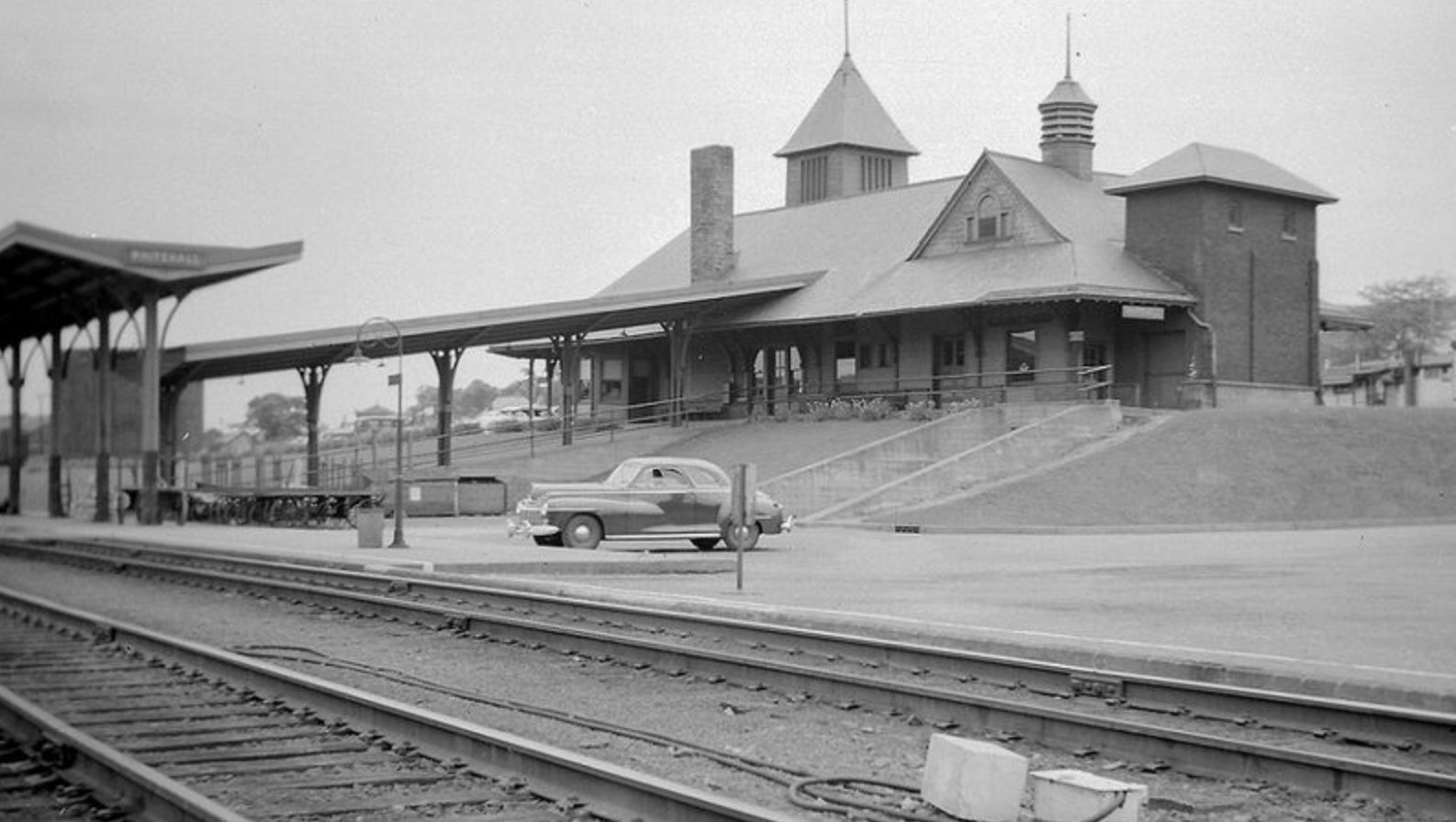
The Whitehall Train Station

The Whitehall Train station many years after our ancestors passed through

AND THEN THERE WERE THE CANALERS....


CANAL BOAT: Ancestors of Alex Glode and Angeline Allard, including Paquet, Allard, Duvernay, Beaudry, and Lalonde moved across the northern border to Champlain NY in the first half of the 19th century probably to farm the level lands there. Eventually, they became canalers along the Champlain Canal from Chazy to Whitehall and to Waterford, NY where they ultimately settled between 1890 and 1900.

CANAL BOAT: Robert Mylott, (Milot) baptized in 1832 in Vercheres, Quebec made his way from the Richelieu Valley, possibly St Jacques-le-Mineur Quebec to Whitehall NY in the 1840s. He was a very young man at the time. How he exactly made this trip we will never know although in an earlier post I made a guess. His grandson, Benjamin Mylott, a canaler eventually came to Waterford where he raised his family.


Friday, January 14, 2011

A First Nation Mother, Marie Aubois

Marie Christine Aubois, born about 1665,  married Jean Roy dit Laliberté in Port Royal (present day Annapolis Royal, Nova Scotia) about 1686.  She through her maternal line was native American,  probably Mi'kma'ki and he was a Frenchman from St. Malo.  Marie Christine and Jean Roy's daughter, Madeleine Roy, married Louis Fontaine and is a mother-ancestor in the Rivet - Lord family.  Madeleine Roy and Louis Fontaine were expelled from Port Royal in the Grand Deportation.


Here are beginning resources about the Mi'kma'ki peoples: Mi'kmaq Resources at Cape Breton University  and Traditional Mi'kmaq Culture

Mi'kmaq Encampment


Marie Aubois existed in the 17th century.  It is important to know that the Mi'kma'ki people continue to exist in a vibrant community. One community is Wagmatcook First Nation. Others are in Nova Scotia and Maine.

Here are links to stories of two other First Nation mothers on this blog:

Marie Miteouamegoukoue - a mother of Mylotts

Catherine Anenotha - a mother of Wills-Bissonnette-Beauvais

Wednesday, December 1, 2010

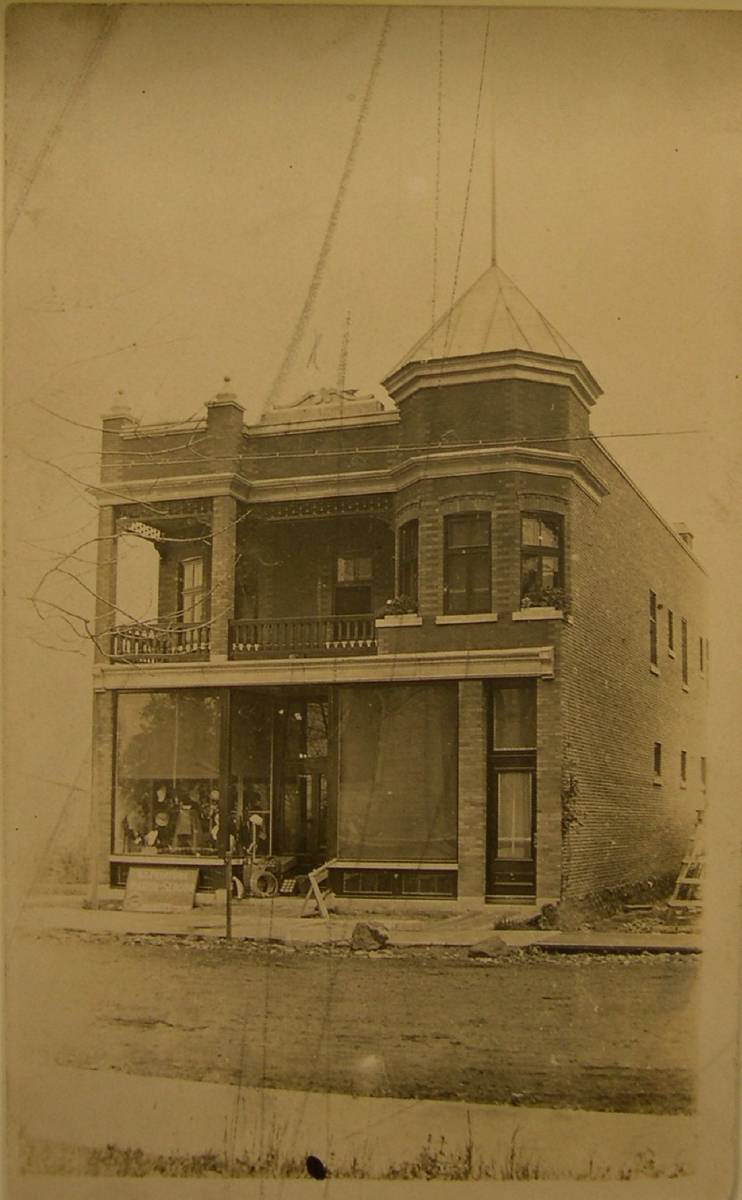
Images of old St Jacques de L'Achigan

These images are collected together for Rivets (descendants of Albert and Raymond)  and Yettos or Guertin (descendants of Claire Rivet who married Walker Yetto) and extended family!  You are all descendants of the Acadians, Amireault, Lord, Melancon, Jeanson, who help to found this special town.  These images of St Jacques de L'Achigan were taken around the time Joseph Emile Paul Rivet was baptized there in 1880. The actual church burned down in 1914 (first photo) but was rebuilt.  Today the town is known as St Jacques de Montcalm.

(Many of these postcards are copied from another site to which I would love to give recognition and provide a lick but I can no longer find it!  If you are the person from Québec who posted these images originally, I will happily provide a link! Thank you)


Below is a recap of the stories written about Acadians in this blog so far.  This list includes some early posts that may not have been well researched but I am reviewing them for accuracy and hope they will "make the cut"!

New Acadia: St Jacques de L'Achigan

Paul Emile Rivet father of Claire, Albert, and Raymond was born in St Jacques de L'Achigan and his mother's family, the Lord or Laurie, was one of the first Acadian families to settle in the town when it was founded as a haven for exiled Acadians. The mother of Claire, Albert and Raymond was born in Saint Côme but her mother and maternal grandparents, Amireault, and maternal great grandparents, Bourgeois, Melancon were all born in Saint Jacques de L'Achigan and their families early settlers. So this village it of great significance to the Rivets of Cohoes as well as many family of Acadian and Québec descent.
The entire story of St Saint Jacques, in French, and in great detail is online here.  it is the story of a village founded specifically for exiles from Acadia in the 1760s.
For a little more information on present day St Jacques,  check out St Jacques on Wikipedia.


Below is the Google translation of the municipal page explaining the seal of Saint Jacques.....


The three shells
Quartered in the first three gold shells Messer St. Jacques.
In the Middle Ages, the shell became an emblem of pilgrimage. And those who went to pray at the tomb of Monseigneur Saint Jacques de Compostela in Spain wide hats adorned their shells. It was the distinctive badge of the pilgrims.

Subsequently came into common usage in the heraldry of the emblazon
"Saint-Jacques" with shells. So we have the right to wear them.

They stand on a gold background, symbolizing the honest people of our affluence and their proverbial generosity.
The chalice and the Host
Second gules a golden chalice in chief of a host of money.
Which says "Saint-Jacques" scroll immediately sees in his mind a legion of priestly and religious vocations.

Red --- --- Gules symbolizes God's special love for Saint-Jacques.
The star and the boat
Azure in the third vessel of silver, floating on a sea of the sinister a golden star.
While the children of Acadia have suffered, we kept a instinctive devotion to Our Lady, Star of the Sea, Hope exiles. 

Ave Maris Stella is the national anthem of the Acadians.  The ship recalls the 1755 deportation, the star and blue are the symbols of that spirit of Mary.
The foot of tobacco
In the fourth gold at the foot of natural tobacco, stem and flowers on a terrace of sand.
Our Parish is in the great history, not only because of the dispersion, but also because of our industriousness that made sense from us, circa 1875, one of the first centers of large tobacco growing in Canada.

Again, the gold evokes the source of income provided by this industry.
These arms are the emblem of what Acadia has given us the best: his devotion to the Eucharist and the Virgin and his work ethic.
They come as a great poem of thanksgiving. They want to proclaim the Magnificat of the recognition of benefits for two centuries and in every home and remember every moment, now and forever, the four corners of heaven and earth, that the Virgin Mary is our guide: IPSA DUCE.


In 1955, the village of St Jacques remembered the 200th anniversary of the Grand Dérangément - the expulsion of the Acadian people from the area around present day Nova Scotia. After wandering several years in the British colonies, the Acadians were reestablished in St Jacques and other small villages in Québec.


Below is a recap of the stories written about Acadians in this blog so far.  This list includes some early posts that may not have been well researched but I am reviewing them for accuracy and hope they will "make the cut"!