Showing posts with label Glode. Show all posts

Tuesday, September 2, 2014

Acadian Tragedy, Rivet and Glode-Mylott Ancestors, The Pembroke and the St John's River

One again, I am returning to the story of The Pembroke.    In an earlier post (October 2010), I wrote  about the ancestors of Edith Mylott née Glode who in 1755 were exiled from Annapolis Royal aboard The Pembroke.  At that time, I didn't include the fact that an ancestor of Rivets, Prudent Robichaud, was also aboard that same vessel as well as others.  The story of The Pembroke is a true hardship story and probably one that historians will likely never know in detail.  The tragedy of The Pembroke was the basis of fiction by Mary L Weekes. 
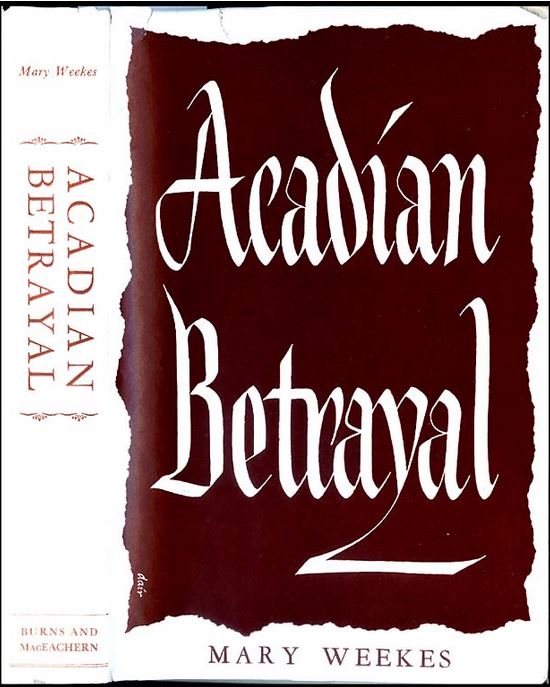
A fictionalize story of The Pembroke can be read in Acadian Betrayal.  It use to be available on the internet.  If you cannot find a digital copy, it sometimes appears for sale on Ebay - but I suspect it wouldn't hold your interest for too long.  It is a typical melodrama.

The story of The Pembroke is a subplot in the tragedy of the Acadian people who were ousted, expelled, excised from the area around the Bay of Fundy from September through December 1755 by New England colonials under the authority of Governor Charles Lawrence and William Shirley, colonial governor of Massachusetts.  Over 7000 Acadian people were dispersed into small ships and sent to colonies along the North Atlantic seaboard and Haiti.  Some ships sank at sea, some were refused permission to dock and passengers remained without food and sanitary conditions in the ships while disease took over.  One ship, The Pembroke, was the exception. Its Acadian passengers overtook the crew and commandeered the ship across the Bay of Fundy to St John in present day New Brunswick.  On board that ship, were not only the Guilbault ancestors of Edith Glode and her sons, there also were the Robichaud, Melanson and Belliveau ancestors of Claire, Albert and Raymond Rivet of Cohoes, New York.  According to the article written by Paul Delaney on Acadian Ancestral Home, the probable leader of the Acadians on The Pembroke was Charles Belliveau. He is also the great great great great great grandfather of Claire, Al and Ray Rivet!!!


After bringing The Pembroke into the mouth of the St John's River, the Acadians were discovered by the English provoking an engagement, firing of arms, taking of English prisoners and ultimately burning The Pembroke so it could not be used against them.  Subsequently, the Acadians made their way to present day Fredericton, New Brunswick, then a French settlement called Saint Anne des Pays Bas where they wintered enduring malnutrition and exposure to the harsh environment.  The Rivet ancestor, Prudent Robichaud, quite elderly, died sometime during this struggle and somewhere along the Saint John River.  It is believed the Acadians including Charles Belliveau,  Charles Melanson, and their families made their way north via canoe on the St John's River through Grand Falls (Grand Sault) to present day Edmunston regions and then onto the Madawaska River to Lac Temiscouata (present day Quebec). The route continued from Lac Temiscouata overland and via waterways to Trois Pistoles on the south shore of the Saint Lawrence River concluding in Ville Quebec.  


Unfortunately, Charles Belliveau and Charles Melanson, like many of the Guilbault family, are believed to have succumbed to smallpox in 1758 and 1757, respectively, after completing their harrowing escape.

Below, the St John River near Fredericton, New Brunswick, Canada


Below is a recap of the stories written about Acadians in this blog so far.  This list includes some early posts that may not have been well researched but I am reviewing them for accuracy and hope they will "make the cut"!

Monday, March 12, 2012

Mapping the Route: Québec to Waterford, NY

A Different Route; a Different Livelihood 
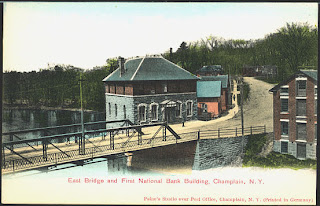
While Solyme Beauvais was making his way to the industrial city of Cohoes in the 1860s via the Central Vermont Railroad, the Rutland Railroad, Troy Salem and Rensselaer Rail, the Poissant-Glode Family took a very different route.  This family "eased" across the northern border from Québec into Clinton County, first as farmers and but eventually as Champlain canalers.  For several generations the physical border was as fluid as the waters of the lakes and rivers they navigated.
This was not the typical French Canadian immigrant family who came to work in textile mills of New York or New England.

According to census information, Luc Glode was probably born in Clinton County in 1837.  The earliest census where his father, Jacob-Jacques Glode, appears is in the 1850 census of Champlain.  There, his name is spelled Jocks Glade.  Jacques was the great great grandson of Jacques Poissant dit LaSaline, a Huguenot and Sargent in the Franche Marine company of de Noyan.  John Fisher has detailed the early Poissant family in France and Québec here.

 Descendants of Poissant dit LaSaline's son Claude used "Claude" as a "dit name" eventually dropping the Poissant and keeping the Claude. The Claude name morphed into Glaude, Glade and Glode. 


The 1850 census heading in Champlain, Clinton County, New York:


Jocks and his six children - with very misspelled names!


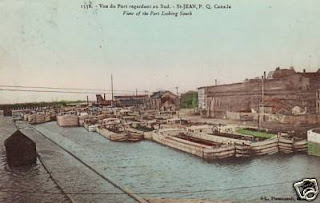
Jacques Jacob, was a famer and laborer but his son Luc Glode became a canalman and "straddled" the border navigating Lake Champlain and the Richelieu. In the 1860 US census he is living in Champlain, Clinton County, NY. with wife and first child.  HOWEVER,  in the 1901 Canada census he can be found in St. Jean/Iberville, Québec!!  

Luc Glode probably grew up in and around the town of Champlain, NY.

Luc Glode likely spent his years navigating the Chazy River ..


and Lake Champlain.....


 and the Richelieu River....


He knew St Jean sur Richelieu....

 and probably the port of Montréal too.

Sunday, September 18, 2011

Our Forefathers in the Carignan-Saliéres Regiment

If you are a descendant of a Mylott, a Glode, a Wills, a Beauvais, a Bissonnette, a Yetto, a St Hilaire or a Rivet on this site, you have an ancestor, at least one and probably more, who was in the Carignan-Salieres regiment.  In the mid 1660s, the Carignan-Salieres, veterans of the war with the Ottoman Empire, recruited new young men in France to be sent to the colony in Québec to protect the economic interests of the crown from the Iroquois nation.  The Iroquois, assisted and encouraged by the Dutch and later English interests in New England and New Amsterdam, picked off settlers in the French Colony - sometimes there were massacres of entire settlements in Montréal, called Ville Marie at that time.   The Champlain - Richelieu water corridor made raids into Quebec from New England a straight shot. The reverse was also true, French interests and allies used the same corridor to raid New York and New England.


Twelve hundred troops began arriving in June 1665 and were immediately put into service building Fort Sorel and Fort Ste Anne on Isle la Motte in Lake Champlain, now a part of Vermont. They also constructed Fort St Jean, Fort Ste Therese, and Fort St Louis (later Fort Chambly), all on the Richelieu River.

In January of 1666, the middle of winter, 300 under equipped troops were sent on a fool's mission into enemy territory by the Québec governor.  Traveling over a hundred miles, starving and hypothermic, they arrived in the Dutch settlement of Schenectady where the kind farmers fed and sheltered them.  They returned to Quebec having learned a brutal lesson that many upstate New Yorkers know too well.  Don't go into the north country without the proper equipment in the middle of January!

Scapulurs worn around one's neck.
Made by nuns for divine protection of the soldiers.
Displayed at the museum at Fort Chambly

Then in the fall of 1666, there was another expedition to Iroquois country.  Traveling form Québec, French soldiers reached their destination in the Mohawk Valley, west of Schenectady in two to three weeks.  This time, they were successful destroying several Mohawk villages.  Their efforts earned a peace between the Iroquois and French settlers after more than two decades of guerilla war by Iroquois.


After the peace was made in 1667, the regiments were disbanded and returned to France. However,  over 400 men choose to remain in Quebec, marry and start families there. We are the descendants of many of these soldiers.


 Below is a link to a gorgeously written document of the individual names of soldiers in the Carignan-Salieres Regiments.

A Listing of Soldiers in the Carignan-Salieres Regiment


The Bissonnette (Wills), Beauvais (Wills), Millot (Mylott), Glode-Poissant and Rivet-LaCasse families all have forefathers who served in the Carignan-Salieres Regiment. Although this list is a work in progress, it is a beginning to identify all Carignan-Salieres forefathers of the families on this site.  You may note in the list below, some individuals are in more than one family; they are ancestors in two families and some like Louis Robert and Nicolas Sylvestre, are ancestors in three families.  Here is the list thus far:

In the Glode-Poissant  family there are at least sixteen:
Louis Badillac dit Laplante
Jean Besset dit Brisetout
Jean Bricault dit Lamarche
Jean Brochu dit La Fontaine
Michel Brouillet dit Laviolette
Etienne Charles dit Lajeunesse
Pierre Couc dit LaFleur
Jean Delpé dit Pariseau
Julien Dumont dit LaFleur
Jean Gazaille dit St Germain
André Jarret dit de Beuregard
Jean Lavallée dit Petit Jean 
Pierre Menard dit Lapierre
Issac Paquet dit Lavallée
Louis Robert dit LaPommeraye
Jacques Têtu dit Larivière

In the Bissonnette family there are ten:
Bernard De Niger dit Sanssoucy
René Dumas dit Rencontre 
Antoine Dupré dit Rochefort
Antoine Emery dit Coderre
Aubin Lambert dit Champagne
Louis Robert dit LaPommeraye
Jean Robin dit Lapointe
Antoine Rousseau dit LaBonté
Jacques Suprenant dit Sanssoucy
Nicholas Sylvestre dit Champagne

In the Beauvais family there are eight:
Francois Biville dit Le Picard
Antoine Emery dit Coderre
Pierre Favreau dit Deslauriers
Nicolas Bonin dit St Martin
Julien Lord dit Montagne
Pierre Mésnard dit Xaintogne
Jacques Paviot dit LaPensée
Pierre Morin dit Champagne

In the Millot family there are three:
Francois Chagnon dit LaRose
Louis Robert dit LaPommeraye
Nicholas Sylvestre dit Champagne

In the Rivet and LaCasse families there are ten:
Antoine Casse dit Lacasse
Francois Chagnon dit LaRose
Bernard Delpêche dit Bellair
Antoine Emery dit Coderre
Pierre Favreau dit Deslauriers
Julien Lord dit Montagne
Piere Mageau dit Maisonseule
Pierre Mésnard dit Xaintonge
Eustache Prévost dit Lafleur
Nicolas Sylvestre dit Champagne


Saturday, September 17, 2011

Broad Street in old Waterford


It really isn't hard to recognize the main thoroughfare in Waterford if you are familiar with the territory. All the essentials are there - the town tower. The electric poles and unpaved road probably would this place this between 1890 and 1900. If anyone can contribute to better dating, please put your information in the comments.  This is the image of the town and business neighborhood my grandmother, Edith Lida Glode, and her parents Alex Glode and Angeline Allard all knew well.
Alex and Angeline were born and married in Champlain, NY where they made their living as canalers and raised the first half of their family.  Before my grandmother was born in 1890, they made Waterford their home.  So this view of Broad Street was part of their life when they were not traveling on the canal.


The photo below may be of Marie Angeline Allard, daughter of canalers, wife of a canaler and mother of canalers....the photo was kept with a few others of canalers.  If it isn't Angeline, it is just fine with me because this is the way I like to think of her and all the women who made their homes on the Champlain Canal. Their apron is on and they are ready for cleaning, cooking, navigating, and minding the children and grandchildren! Let's go work!


Friday, May 13, 2011

Family History Road Shows

Slowly, very slowly, I've been assembling Google Maps for families of this site who may want to take a road tour of towns and villages in Québec, New York, Vermont, and Nova Scotia.
 I've also added towns in France, England and Germany if anyone is planning a big trip.  If these Google maps are set right, you can see the places where our ancestors and family lived, worked, went to school and church, were born, died and buried.  The places in the Old World where our adventurous ancestors left are also included.
I will also try to put a link to the maps on the Family Page.

These maps are not completed; they are works "in progress".  If anyone in the family reading this would like to collaborate and add information, please contact me at FrancoAmericanGravy@gmail.com and I will add you as a collaborator.

Take a look and send your comments!
FA Gravy

Wills Family History Road Tour

Mylott-Millott Family History Tour

Rivet and Lacasse Family History Tour

Glode-Poissant Family History Tour

Beauvais-Bissonnette-Goekel Family History Tour

Sunday, May 1, 2011

Living and Working Along the Champlain Canal, 1


The colonial warpath from Albany to Montréal made way for 19th century canals. The forts at Chambly, Ile aux Noix, Crown Point and Ticonderoga became silent and fell into ruin.  Ghosts of soldiers made way for canalers, traders and tradesmen who helped move timber, grain and iron ore from the mountains and fields to cities and towns.

My Glode and Mylott ancestors lived and worked on that Richelieu-Champlain-Hudson waterway.  Champlain canalers shipped along the Hudson from the Atlantic Boat Basin in Brooklyn, to Albany, Cohoes and Waterford.  Then they continued through the Champlain Canal to Whitehall, up Lake Champlain to the Chambly Canal and the St. Ours Canal.  My dad, born on a canal boat in summer shipping season in Chambly Québec, remembered some winters "iced in" on piers in New York City and other years "iced in" in Montréal.

The Glode family called Champlain, Clinton County, NY their home port.  Great grandfather, Alexander Glode and great grandmother, Marie Angelique Allard were married there on August 14th, 1883.  By 1900 they moved their family to Waterford, NY.  Likewise, the Mylotts called Whitehall, NY their home port.  When Milo Benjamin Mylott married Edith Glode in 1910, they too made Waterford their home port,  starting their family there while continuing canaling.

Inside the Cabin


Railroads took over most of the transportation industry and historians of the canal state the canal system's days were numbered by 1910 or even before but that did not keep the state to find funds to enlarge it and families to keep living and working on the canals. 


Wash Day on the Canal Boats

Sunday, April 24, 2011

A Moving Brickwall: Marie Sophie Lalonde from Champlain NY to Holyoke, Massachusetts

Taking a little left turn here to write about my genealogical ups and downs and how researching leads to new interests and finding out new things about places and people everywhere.

You might already know how fascinated I am by the canals that went through Cohoes and Waterford - the Erie, the Champlain and the canals that were built specifically to generate power for the Harmony Mills.  So imagine my delight when researching Marie Sophie Lalonde, I learned about the power canals in Holyoke, Massachusetts.   Here's the research background...

Marie Sophie Lalonde is what I call a moving brick wall.  Sophie  married Jacques Jacob Poissant dit Glaude (Glode) whose father dropped the Poissant when he moved across the border from Québec to Clinton County, New York.
Sophie and Jacob are the great great grandparents of Edgar, Milo and Arthur Mylott through their mother Edith Lida Glode. I cannot locate the marriage of Sophie and Jacob or anything about her parents, despite obtaining her death certificate from the Commonwealth of Massachusetts.  The document states she died in South Hadley of "old age" on June 24, 1893; she was 84 years old and the widow of John Glode. Her parents were both born in Canada.  Her father was Norbert Lalonde and mother was Larvie Ledamp (sic).

She raised her family in Champlain, NY.  Several years after becoming a widow, she can be found in Holyoke city directories.  The 1888 Holyoke City Directory states she is boarding at 101 Lyman St., Holyoke.  Her son Nelson Glode also lives there.  "Nelson" here is the Anglicized name for Narcisse.


  101 Lyman Street looked quite impressive in this 1877 map of Holyoke and its power canals on the Connecticut River.


the detail....


So I checked out Google maps for present day 101 Lyman Street to see if the house is still there.  I found an empty area and then found a blog with unusual photographs from a fire on December 23rd and 24th, 2009 at 102-103 Lyman Street leaving fifteen families homeless.  Unfortunately the website that contained the story and photos no longer exists. It would seem the building was demolished after the fire. Industrial era  buildings are vanishing rapidly but the canals of Holyoke are still there.....Click on these links to check it out:

Friends of Holyoke Canalwalk

Wikipedia: Holyoke Canals

According to the city directories from 1888 through 1902, Sophie Lalonde's sons William and Nelson had many different jobs: clerk, teamster, laborer on Holyoke Street Railroad Company, worker in the paper mill. Finally, in 1902, ten years after Sophie's death,  they operated their own "feed stable" at 59 Hampden St in Holyoke along with their sons. Her grandson, Joseph, appears to have died prematurely - his wife was Lucie Salabin who appears as a widow in the 1902 directory listing:


After Sophie's death in 1893, her body was returned to Champlain, NY where I suspect she was buried alongside her husband, Jacob Glode.

Monday, January 31, 2011

No Longer a Mystery: Arthur Homer Mylott 's Birthplace. Alternate title: "Birthing Babies on a Boat"


Right: Arthur Homer Mylot
 with his cousin Effie Van Hoesen
 on the left
 at Doyle City, Waterford. circa 1922
This may be Arthur in the wagon and older brother pulling
Arthur is the smallest kid in the group
The boy in black looks like older brother, Milo.


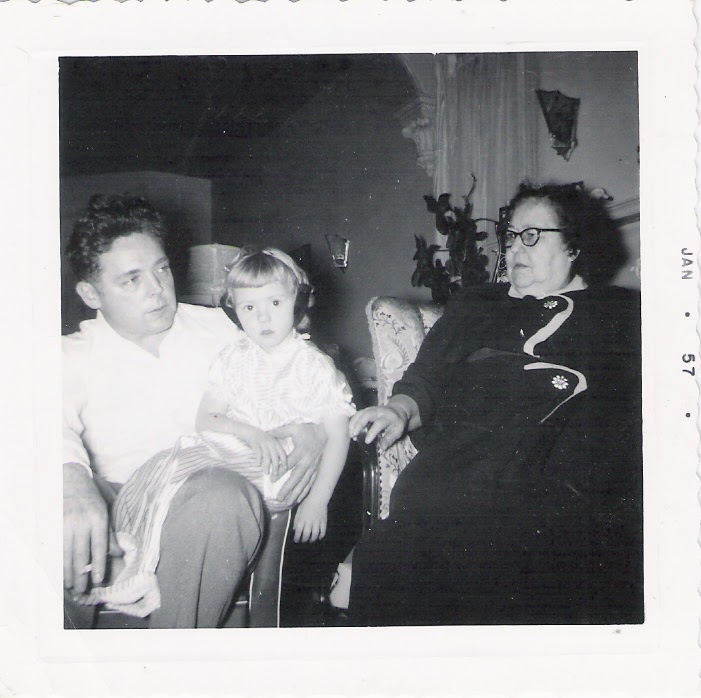
Arthur Homer Mylott,
daughter with the earmuffs,
and Arthur's mother, Edith Lida Glode.
Around the holidays 1956.


Until the day he died, Arthur Homer Mylott, never knew exactly where he was born.  In the early 1980s he applied for a passport.  When he went to get a birth certificate, he found out he had an interesting challenge.  There was no birth certificate in the village of Waterford, NY.  There was no birth certificate in the town of Waterford.  He was told the State of New York probably had a record of his birth and to write to New York State.  No record was found at the state.  Passport officials stated he could get a letter written by an older sibling stating he was a brother and always had been a brother and born in Waterford.  His brother Milo obliged and a notary signed the document.  He finally got a passport.  But the question always nagged him and he wondered exactly why he had no birth certificate and exactly where he was born.  He was always told he was born on the boat- the Champlain Canal boat his parents worked in summers.  He joked about it,  "I was born on the boat" but he was never certain.  Then while checking Ancestry.com for his great grandfather's birth in Québec, I passed right ofter a name that appeared in my search "Joseph Arthur Omer Mylott".  I was looking for "Robert Mylott" and that didn't seem close enough to pursue.  The next day I looked and there was "Joseph Arthur Omer Mylott" again.  This time it caught me off guard and I took a deep breath.  Could it really be my Arthur?
Yes it was.  Joseph Arthur Omer Mylott, son of Benjamin Mylott and Ida Glode, baptized on July 15th, 1918 in St Joseph's Church in Chamby, Québec!

Edith Ida Glode
1889-1965
A strong woman, a survivor.
Giving birth to babies on boats!
A widow and
mother of Milo, Edgar and Arthur
and several children who did not live to adulthood.
Grandmother, Great grandmother too.


St Joseph's, Chambly


The document states Arthur's father, Benjamin Mylott,  is a navigator.  Arthur Mylott was born on the canal boat while in the Chambly Canal!  


Unfortunately, he never knew...it was a little too late.


Joseph Arthur Omer Mylott
July 15, 1918 - October 14, 2006
The Best of the Best
 A hero, my "King Arthur"


Poestenskill Creek


Green Island, NY
In Panama Canal Zone 1939

and finally below are images of the canal at Chambly....