Stories of family and ancestors who lived and worked in Cohoes (textile and garment workers, butchers and barbers), Waterford (canalers), Whitehall (farmers and canalers), Port Henry (iron miners and Civil War soldiers), Champlain (canalers and farmers) and other towns along the Champlain Canal in New York State with some diversions to the places they emigrated from....Quebec (landless farmers, shoemakers, sailors, soldiers), Acadia (more farmers), and even Cornwall, England (tin miners).
Showing posts with label Champlain Valley. Show all posts
Monday, October 31, 2011
Goodbye October
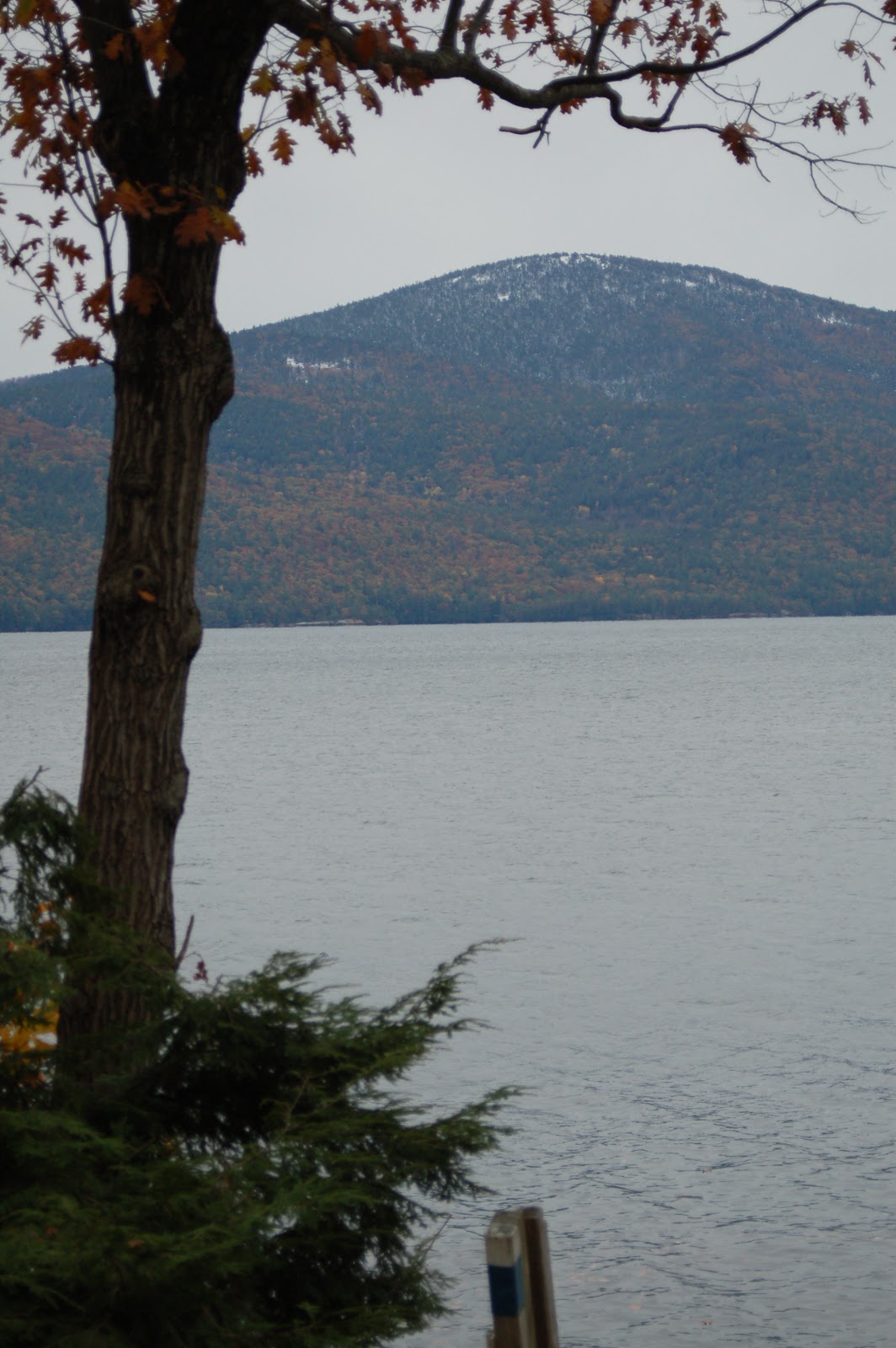
Haven't been blogging too much in October for a few reasons....work at my job has been very busy, there's that tinge of carpal tunnel problems the longer I stay at the keypad, autumn has been too beautiful to stay indoors and finally, my affectionate cat is back on my lap every time I sit down to write. I don't want to leave FrancoAmerican Gravy empty for the month of October, so here are photos taken in the past two days in the Lake George and Champlain Valley of New York. Here they are...some taken before the snow dusting and some afterwards...
Saturday, January 15, 2011
The Forts of Our Fathers in the Champlain and Richelieu Valleys
Landstat view of lower Richelieu River, Lake Champlain and Lake George, north is on the right and south on the left....
Visiting Fort Ticonderoga was an annual event when I was growing up. My mother, Dorothy Mae Wills, loved the place at the northern end of Lake George and the southern end of Lake Champlain. We went there every year and it was the place we were most likely to take out of town visitors. Today I have pictures of several different trips to the fort: with cousin Wayne, with my childhood friend Marianne, with college students from Europe. To this day it is often a place I love to bring visitors.
and here are some more recent views.....
My mother had no idea just how closely her family history and mine was interwoven with Fort Ti and other forts in the Champlain and Richelieu Valleys or did she? My mother was ever mindful of the ancestors even though she did not know who they all were. Perhaps, on some level, she knew Ticonderoga and the Champlain Richelieu corridor was the location and the reason for her ancestors living where they lived and why she was there. Many forefathers of the families featured on this blog, Beauvais, Bissonnette, Glode, Poissant, Lavallé, Robert, Rivet, served in the Carignan-Salières Regiment in the forts from 1665 to 1668, or later in the Compagnies Franches de la Marine or the Regiments of the French and Indian War. They served in the lands of Champlain and Richelieu Valleys.
The French claimed and occupied the area around northern Lake George or Lac Saint Sacrément through Lake Champlain to the Richelieu Valley from 1609 to 1759. From the most southern to northern points, the forts were...
The northern forts built in the 17th century Ste Therese, St Jean, St Louis/Chambly, and Sorel were constructed to defend the settlements from Iroquois raids. Soldiers of the Carignan-Salières built and served in these forts.
.
The southern forts constructed in the 18th century, Carillon (Ticonderoga), St Frederic (Crown Point), and Ile-aux-Noix (Lennox), defended French interests against the English. Today the French names for these forts are effaced from common memory; the English names, or in the case of Ticonderoga the names the English gave, are all that remain.
Visiting Fort Ticonderoga was an annual event when I was growing up. My mother, Dorothy Mae Wills, loved the place at the northern end of Lake George and the southern end of Lake Champlain. We went there every year and it was the place we were most likely to take out of town visitors. Today I have pictures of several different trips to the fort: with cousin Wayne, with my childhood friend Marianne, with college students from Europe. To this day it is often a place I love to bring visitors.
![]() |
| Visiting Fort Ticonderoga in the 1950s |
![]() |
| Wayne and I on the cannons |
and here are some more recent views.....
| The lower Champlain Valley from Carillon |
| Carillon flying the colors of the French Regiments |
| Moat around Carillon |
My mother had no idea just how closely her family history and mine was interwoven with Fort Ti and other forts in the Champlain and Richelieu Valleys or did she? My mother was ever mindful of the ancestors even though she did not know who they all were. Perhaps, on some level, she knew Ticonderoga and the Champlain Richelieu corridor was the location and the reason for her ancestors living where they lived and why she was there. Many forefathers of the families featured on this blog, Beauvais, Bissonnette, Glode, Poissant, Lavallé, Robert, Rivet, served in the Carignan-Salières Regiment in the forts from 1665 to 1668, or later in the Compagnies Franches de la Marine or the Regiments of the French and Indian War. They served in the lands of Champlain and Richelieu Valleys.
The French claimed and occupied the area around northern Lake George or Lac Saint Sacrément through Lake Champlain to the Richelieu Valley from 1609 to 1759. From the most southern to northern points, the forts were...
Fort Carillon built 1755-1759
Fort St Frederic 1731
Fort Ste Anne on Isle LaMotte in Lake Champlain built in 1666
Fort Ile-aux-Noix built 1759
Fort Ste Thérèse built 1666
Fort l'Assomption 1666 - later named St Jean
Fort St Louis 1665 - later named Fort Chambly
Fort Richelieu 1641 - later Fort Sorel
The northern forts built in the 17th century Ste Therese, St Jean, St Louis/Chambly, and Sorel were constructed to defend the settlements from Iroquois raids. Soldiers of the Carignan-Salières built and served in these forts.
.
![]() |
| The 17th Century Forts |
Here is a list of stories on this blog about the forts in the Champlain-Richelieu Valleys:
Subscribe to:
Posts (Atom)