Showing posts with label Guertin. Show all posts
Showing posts with label Guertin. Show all posts
Thursday, December 25, 2014
Christmas Day in Fullerton, California 1961


Saturday, September 21, 2013
Ma Marraine "Margie": When Marie Marguerite Yetto was "Miss Cohoes"

Sonny, Aunt Claire and Margie (my godmother)

Al Rivet and Marguerite Yetto, my godparents.
Margie was thirteen when she stood in the vestibule of St. Joseph's Church in Green Island and became my godmother. Thirteen years older is just the right number of years to create an image of an fascinating teen idol to a very young school girl and that is what Margie became to me - gorgeous and talented. I idolized her and usually just stared at her whenever she walked into the room when I was at my Aunt Claire's house on Summit Street in Cohoes. I would usually visit on Saturdays in the company of my Uncle Al who would fix something for his sister, Aunt Claire. There was always a faucet leaking, the refrigerator needing some attention. I was 3 or 4 years old and too young to fully understand all the happenings in the household on Summit Street. It was about that time, 1951-6, that Margie
started showing up in the Cohoes section of The Troy Record newspaper. She was the Grace Kelly of Cohoes and when I search the newspapers at that time Margie is winning art contests sponsored by the Lions club (1951), portraying characters in high school plays and working on costume design.

Then in 1956, she is selected "Miss Cohoes". I found the news story in the Times Record thanks to a subscription to Ancestry! My dear mother was not fooling! How I wish I had a picture of Margie in her Miss Cohoes regalia!

As Miss Cohoes, Margie appeared at Cohoes parades, dedications and city events like the one below as an ambassador of youth. She was quite stunning from all accounts.

Margie was engaged to be married by her senior year of high school.

She was full of promise but she and her young family endured several sad events including the tragic accident of her father leaving him disabled and the death of her daughter in early childhood. Despite her personal tragedies, Margie raised her family wisely and well. I lost communication with my teen idol as I grew older and went my own way though college, career and family but in the year before she died (2002), she and I had two lengthy phone conversations which I will treasure in my memory bank for a long time.
I only have a few pictures of Margie from the 1950s when I was a toddler and she the young girl growing into a beautiful young woman of promise and dreams. That's how I will remember "ma marraine". AND "YES" - Margie was MISS COHOES 1956!!!

Thursday, June 23, 2011
FrancoAmerican Legends in California
One summer day in 1976, I visited with two legends in California....
Below: Maire Claire Yetto neé Rivet and her brother Joseph Albert Rivet in a small town in the San Bernardino Mountains.

I have written about Joseph Albert Rivet in several other posting on this blog. In this posting I will write about his sister Marie Claire.
Below: Marie Claire Rivet

Marie Claire Rivet was born in Cohoes, New York in 1918. Her parents were Joseph Paul Emile Rivet and Marie Louise Lacasse. She married Walker Yetto (origin of surname: Guertin). They raised their family in her family home on Summit Street in Cohoes overlooking the Harmony Mill and the Hudson Valley. Their situation was complicated after she was hurt in a serious traffic accident: a tractor trailer truck hit her vehicle and she sustained neck injuries. Soon thereafter Walker was injured in a recreational vehicle. Then in 1965, after several years of poor health, Walker Yetto died and Claire struggled to maintain her home and family. As a widow, she came to a decision - leave New York and settle in California where her brother Al had moved years before. She packed everything in her car and moved. She found a job working as a rural mail delivery person. Her work started early at the local airport where she picked up heavy sacks of mail despite her physical pain from the neck injuries. She bought her own home and lived there until her death in 2003. She was my mother's best friend. She was my Aunt Claire.
She is a legend. Her life was not a picnic...it was hard starting from her childhood with a very stern father who was never remembered for kindness. Her mother died when she was five years old. Her stepmother Malvina Hamel was remembered as kind and gentle. Claire birthed children who lived to become adults and she miscarried others. She worked all her life and she worked hard. When misfortune came into her life she never looked for pity. She was strong; perhaps the strongest. When I visited her a few years before she passed on, she was happy, self-sufficient, and gracious despite the long oxygen tubing she trailed about her home as she conducted her daily chores. That week I last visited, she asked me to make her vegetable stir fry, my specialty. I did and she loved every bit of it! Simple things made her happy. She was tough. She never gave up her faith. She never gave in. She loved her children and grandchildren.
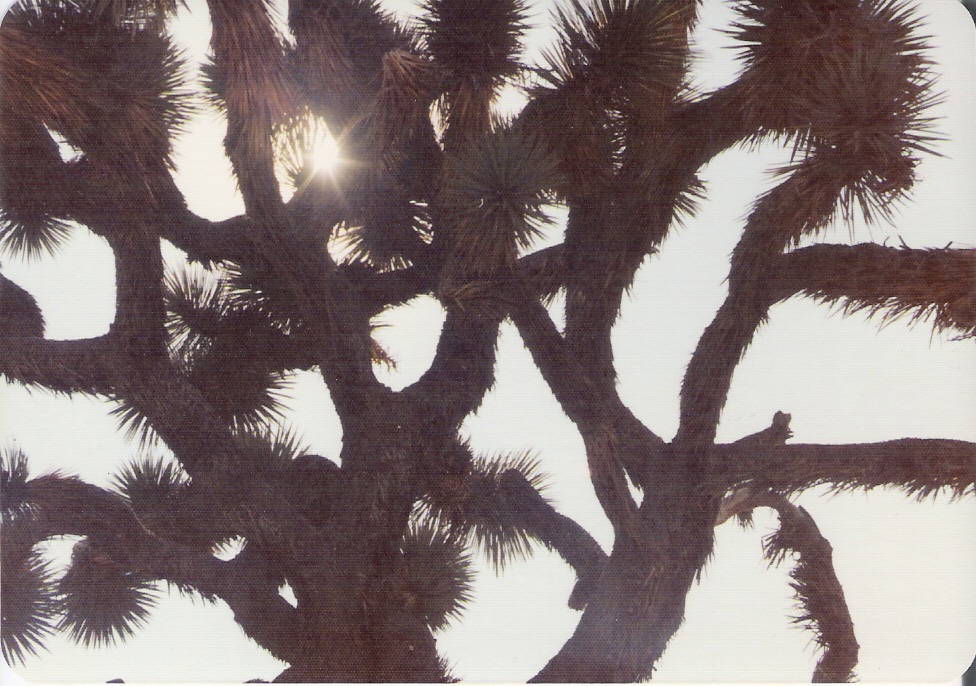
Here are a few more photos from that day at Aunt Claire's home including some of the Joshua trees surrounding her home:




Sunday, January 23, 2011
Guertin into Yetto? How?
Marie Claire Rivet (1918-2003) married Walker Yetto (1918-1965) and all their children had beautiful red hair. I thought Uncle Walker was Irish - he had red hair too.
When I started looking into Uncle Walker's ancestors, it was pretty clear Uncle Walker was mostly French Canadian - at least on his father's side. The Irish was on his maternal side. Not only was he French Canadian, his surname "Yetto" evolved from Guertin. The two pronunciations are light years apart so I had to look more deeply into how this could have happened. I didn't find much information. I emailed several researchers on the non defunct Quebec Research List-Serv and got some replies including this comment:
"The only thing I can think off that would explain why the name GUERTIN
became YETTO for these branches is that they must have been a heck of a
regional accent when they pronounced their name.
Some French Canadians tend to add letters to words when they pronounce
them. "Tu" becomes "Tsu", for example. It is possible that GUERTIN was
pronounced as GUYRTAH, factoring in a thick St Hyacinthe accent, which
then could have been transcripted as YERTA or YERTO. Maybe. If on top
of that they spoke rapidly, then the "r" could have also been lost in the translation.
But, all and all, this is not one of the most obvious cases of transliterations of a name."
____________________
It seems the best source is on a website Variations on the Guertin Name
There's many variations including...
Gartin found in Vermont
Gertin
Gordon
Guertan
Girton
 |
| There's three Yetto children in this picture. Look for the red hair! |
 |
| There's 2 Yettos in this photo: Wayne is the boy in the red stripe shirt. His older sister, Margaret, is protecting her godchild from tumbling off the table! |
When I started looking into Uncle Walker's ancestors, it was pretty clear Uncle Walker was mostly French Canadian - at least on his father's side. The Irish was on his maternal side. Not only was he French Canadian, his surname "Yetto" evolved from Guertin. The two pronunciations are light years apart so I had to look more deeply into how this could have happened. I didn't find much information. I emailed several researchers on the non defunct Quebec Research List-Serv and got some replies including this comment:
"The only thing I can think off that would explain why the name GUERTIN
became YETTO for these branches is that they must have been a heck of a
regional accent when they pronounced their name.
Some French Canadians tend to add letters to words when they pronounce
them. "Tu" becomes "Tsu", for example. It is possible that GUERTIN was
pronounced as GUYRTAH, factoring in a thick St Hyacinthe accent, which
then could have been transcripted as YERTA or YERTO. Maybe. If on top
of that they spoke rapidly, then the "r" could have also been lost in the translation.
But, all and all, this is not one of the most obvious cases of transliterations of a name."
____________________
It seems the best source is on a website Variations on the Guertin Name
There's many variations including...
Gartin found in Vermont
Gertin
Gordon
Guertan
Girton
Yarter
Yetta
Yettein found in Michigan
Yettaw also found in Michigan
Yetto found only in Troy, NY .............but the original name for all of them was Guertin.
The ancestor who left Québec for New York was JEAN BAPTISTE GUERTIN, born in St Hyacinthe on 30 December 1828. Relocated in Troy, NY, he can be found in the 1860 census and seems to have been employed in iron works as a "spikemaker" In the 1870 census he is employed as a carpenter. Here is his baptism record at Our Lady of the Rosary in St Hyacinthe:
Jean Baptiste Guertin was a direct descendant of Louis Guertin dit La Sabotier aka Louis the clog shoemaker. And if you are a Yetto, you are too!


Yetta
Yettein found in Michigan
Yettaw also found in Michigan
Yetto found only in Troy, NY .............but the original name for all of them was Guertin.
The ancestor who left Québec for New York was JEAN BAPTISTE GUERTIN, born in St Hyacinthe on 30 December 1828. Relocated in Troy, NY, he can be found in the 1860 census and seems to have been employed in iron works as a "spikemaker" In the 1870 census he is employed as a carpenter. Here is his baptism record at Our Lady of the Rosary in St Hyacinthe:
 |
| Baptism of Jean Baptiste Guertin , later Yetto at Our Lady of the Rosary, St Hyacinthe, QC 30 December 1828. |
Jean Baptiste Guertin was a direct descendant of Louis Guertin dit La Sabotier aka Louis the clog shoemaker. And if you are a Yetto, you are too!


For a long time, shoes were expensive items and people maintained them carefully in order to keep them as long as possible. This was particularly true for the common people. They viewed shoes as items of wealth, occasionally handing them on from one generation to the next, as demonstrated by certain inventories made after death. In 17th-century New France, French-style leather shoes were the prerogative of the rich bourgeois. The average peasant had to settle for moccasins – borrowed from Native fashion – and clogs. Clogs were very popular because they were waterproof, unlike leather shoes, and because they were inexpensive. They were worn alone or with shoes, to protect them in wet conditions. When worn alone, they were stuffed with straw for additional comfort. In cold weather, they were filled with hot embers for a few minutes, before being worn outside. Clogs were carved from a single piece of wood by clog makers*. Initially, in order to be close to their primary resource, clog makers would set up shop in shacks next to forests. These shacks then transformed into small work sites where clog makers plied their trade. For this reason, clog makers were often associated with logging operations, much like loggers or sawyers.
The word sabotage in French – which means to do work badly or intentionally destroy material or equipment – comes from the word “sabot” (“clog” in English)? In fact, in the 19th century, in order to protest against their poor working conditions in the factories, French workers used their clogs to block and break the machinery.Then the clog makers left the forest. Some opened workshops in the towns and villages while others became traveling craftsmen. The traveling craftsmen offered their services during their annual visit, in the homes they came across on their way. They brought clogs of various sizes with them, to shoe women, men and children. When they did not have the right size with them, they would take measurements and returned at a later date with clogs made to measure. How did the clog maker make clogs? He would proceed in stages. First, he would use an ax to cut sections of wood in various lengths, one length for each clog size. He would use the trunk of a freshly cut tree, since green wood was easier to work. Then, he would cut the lengths into blocks and each block would be used to make a single clog. The clog maker would carve the clog, which was held in place by a clamp, using a variety of chisels. He would shape the clog, and then hollow it out with an instrument known as a spoon. Occasionally, he would give rein to his imagination and engrave attractive designs on the clog. This was followed by drying. The clog had to be dried in the open air in order to harden the wood and make the clogs durable. The clog maker would stack the clogs so that the air would circulate well among them. The more sap the wood contained, the longer it took to dry. For example, clogs made from alder wood had to be dried for nine months before they could be worn. In addition to alder wood, the clog maker used a variety of other woods such as beech, birch, maple, black poplar, Scotch pine and walnut. Unlike the wooden shoes or clogs popular in France, Belgium and Holland, the people of Great Britain wore another type of clog that consisted of a leather shoe with a wooden sole made in much the same manner as clogs. In Quebec, this type of footwear became popular after the conquest, although people continued to wear clogs until the 19th century and even later.
In the Lac Mégantic region, clog makers could still be found in the 20th century. The men who made up the Great Recruit of 1653, included one clog maker, Louis Guertin dit Le Sabotier. He was originally from the Anjou region in France. It is not known whether he actually practiced his trade in New France.
Sources:
LANGLOIS, Michel. Montréal 1653. La Grande Recrue, Québec, Les Éditions du Septentrion, 2003, 268 p. Le Petit Larousse illustré, Paris, Larousse, 2002, 1786 p. POMERLEAU, Jeanne. Métiers ambulants d’autrefois, Montréal, Guérin, 1990, 467p. SEYMOUR, John. Métiers oubliés. Métiers d’autrefois, Paris, France Loisirs, 1985, 187 p.
Sources:
LANGLOIS, Michel. Montréal 1653. La Grande Recrue, Québec, Les Éditions du Septentrion, 2003, 268 p. Le Petit Larousse illustré, Paris, Larousse, 2002, 1786 p. POMERLEAU, Jeanne. Métiers ambulants d’autrefois, Montréal, Guérin, 1990, 467p. SEYMOUR, John. Métiers oubliés. Métiers d’autrefois, Paris, France Loisirs, 1985, 187 p.
I know this does not explain how Guertin changed into Yetto. Nonetheless, if you are a Yetto descendant reading this, I hope you find the information interesting. If you have information about the evolution of the name from Guertin to Yetto, please send that news on to me, FrancoAmerican Gravy. My father is also a descendant of Louis Guertin, the clog maker, through his son Pierre. The Yettos descended through Louis's son, Paul Guertin.
Postscript in 2023: Thank you to everyone who commented and emailed me about the Yetto-Yettaw-Yarter-Guertin name connection. Name variations, Anglicizations, and 'dit' names have haunted and stymied genealogists of Franco-American families. There is no single authority or reference as far as I can find, however here are links to some help:
American-French Genealogical Society's database of Variations (link to the download. This has not been updated for many years.)
A reference book available from Genealogical.com

Subscribe to:
Posts (Atom)