Below: Kinner or Wood Creek Cemetery, along Route 4 between Fort Anne and Whitehall, NY
Stories of family and ancestors who lived and worked in Cohoes (textile and garment workers, butchers and barbers), Waterford (canalers), Whitehall (farmers and canalers), Port Henry (iron miners and Civil War soldiers), Champlain (canalers and farmers) and other towns along the Champlain Canal in New York State with some diversions to the places they emigrated from....Quebec (landless farmers, shoemakers, sailors, soldiers), Acadia (more farmers), and even Cornwall, England (tin miners).
Saturday, October 30, 2010
Visiting the Relatives in Greenwich, NY circa 1934
The Wills Family of Cohoes, NY would visit their papa's sister's family in Greenwich, NY
Papa was John Albert Wills Sr and his sister was "Liz" who married Patrick White (born in Vermont) and who had a beautiful home in Greenwich, NY. I believe the home no longer exists and was on the bend next to the river on the eastern side of town. In some pictures the railroad bridge that still exists is in the background.
Liz Wills and Patrick White had several children who were born in Pownal, Vermont. They named one daughter Elestra, after her great grandmother back in St Uny Lelant in Cornwall. Elestra seemed to prefer to be called Leslie. She married Louis Donahue, a butcher, and lived in Easton where Louis grew up. There was a son named Gorman and another daughter Annie. There may have been more children. Sometime in 1959, my mother took me to Greenwich to visit Annie who married James Floyd Ahern. They had a liquor store in a building that is now a laundromat on the north side of the main street in Greenwich.
When the Wills family visited, they probably stayed for a few days and seemed to enjoy the opportunity to take lots of pictures, especially of daughters Elizabeth, Dorothy and Etta with spinning wheels and watering cans in the garden.
Is this across the river from the present day site where the White home once stood?
![]() |
| The home of the Mr. & Mrs. Patrick White, Greenwich, NY in 1934 |
![]() |
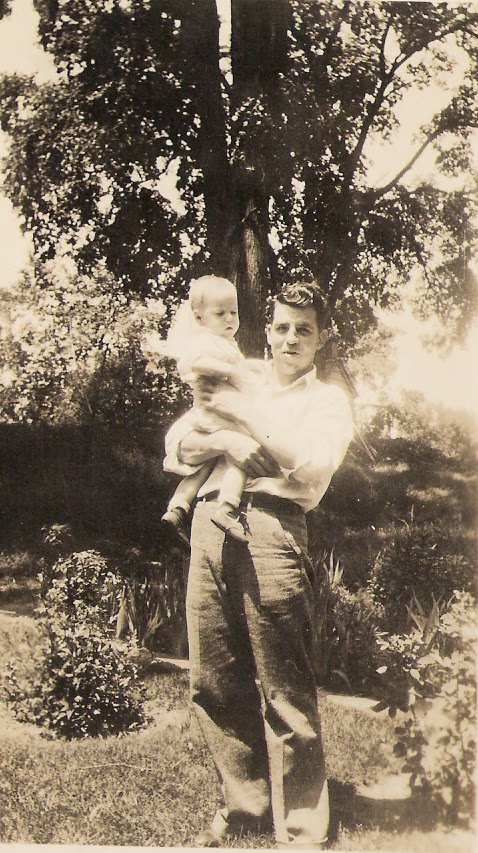
| John Albert Berryman Wills and his sister, "Liz" Wills who married Patrick White |
![]() |
| Dorothy Mae Wills, Etta Wills, Elizabeth Wills with Billy and Phil. |
![]() |
| Elizabeth Wills and Dorthy Mae Wills behind her |
![]() |
| Annie White and Elizabeth Wills |
![]() |
| Gorman White |
![]() |
| Gorman White and Unidentified Child |
![]() |
| Etta Wills |
![]() |
| Dorothy Mae Wills and her brother John Wills in the background |
![]() |
| Elestra "Leslie" White |
![]() |
| "Leslie" or Elestra White Donahue with her husband Lewis Donahue and son Billy. |
![]() |
| Annie White |
![]() |
| Annie White and Unidentified Child |
![]() |
| Annie White |
![]() |
| Aunt Liz's Home |
![]() |
| Billy -Beth_Phil Beth is Elizabeth Wills, daughter of John Wills & Libby Bissonnette |
![]() |
| Phil, Annie White Ahern, Billy |
![]() |
| Phil and Billy |
![]() |
| Billy, Uncle Pat, Phil |
![]() |
| Elizabeth and Etta Wills |
![]() |
| Annie White Ahern |
Is this across the river from the present day site where the White home once stood?
Is this the same railroad bridge that is in the background of the photo of Etta Wills with the watering can?
Thursday, October 28, 2010
Lea: French Talk in Cohoes
Lea, still speaking French in Cohoes....
Although I usually do not write about the living, I want to make a small exception to tell you, dear cousins, about Lea who is truly a special lady. Lea's maiden name was St. Hilaire and she grew up in "The Orchard", an area of Cohoes west of the the falls where her grandfather bought a large tract of land and farmed. Her father was Alfred St. Hilaire and her mother was Rosalie Chouiniere. Her grandfather was Louis St Hilaire, born in 1858 in Napierville, Québec (Just a little north of the US-Canada border) and her grandmother was Elisa Paré; they were married in Napierville and emigrated to Cohoes in the 19th century. Louis St. Hilaire's father was Jean Louis St. Hilaire (also called Thomas) and his mother was Émélie Mongeau.
When I was a young girl, I probably met Lea several times because she often visited her cousin and his wife, Arthur St. Hilaire and his wife Muriel Etta Wills who were my uncle and aunt. Of course I didn't remember her, I was young and unimpressed by tradition at that time! Luckily, in the past year I was advised by another cousin to "go see Lea" and that is exactly what I did! What a wonderful time I spent with "Lea of the Orchard".
Lea grew up speaking French and English; most of her schooling was in French. She always spoke in French with her grandparents. She still loves to speak the French she remembers which now is mostly songs and prayers she learned as a child. I have visited Lea in recent months, her health is not the best. She has many stories about growing up French Canadian in Cohoes. In the coming months, I hope to share some audio clips of Lea telling some of her stories. Lea is one of the last of a rare kind...a true FrancoAmerican and one of the kindest and most gentle ladies of her era.
The streets of Cohoes once rang out with French in the same way that today Spanish is heard in large and small cities in New York. Children were taught French in school but were also taught school in French! Church services and social gatherings were conducted in French. Sometime soon after World War II, that all changed and today there is no longer any French to be heard in Cohoes. The French schools are long gone; the French Catholic churches have closed.
By the early 1990s, the Albany Times Union story lamented the sad decline of French and Franco traditions in the story below...
click on the image to enlarge and read with more ease
Saturday, October 23, 2010
Acadians in the Rivet Family who Endured the Expulsion
As of this date in my research, I have identified twenty seven individuals - ancestors - of the Rivet family who endured the expulsion. The first individual identified in the list, Prudent Robichaud was elderly at the time and did not survive the ordeal. Interestingly and sadly, Prudent Robichaud may have died despondent and dispirited. He was a key community leader who spoke both French and English and found a role keeping peace between the English rule and the French agricultural community. The University of Moncton's website on the history of Acadia, offers a brief biography of this man....
Prudent Robichaud (c. 1669-c. 1756)
"Prudent Robichaud, probably born in Port-Royal, was chosen in 1710 as the spokesman for the community, which was then under British rule. After 1720, he was an Acadian delegate who negotiated with the British administration. During that time, he was also one of the main suppliers for the British garrison of Port-Royal (then called Annapolis Royal), providing wood and food to the troops. In 1727, he was appointed justice of the peace for Annapolis Royal by British Lieutenant Governor Lawrence Armstrong and in 1733, Lawrence called upon him to collect the moneys that were to be paid to the British Crown. For over thirty years Robichaud worked with the British administration, but that would not save him from the Deportation. Despite his advanced age, he was embarked on the Pembroke with many other Acadians in 1755. "
Therefore, Prudent Robichaud was on board the same ship with the ancestors of Arthur Mylott, the Guilbault Family, as noted in an earlier entry on this blog. The history of The Pembroke on Acadian Ancestral Home states Prudent probably died in the summer of 1756 along the St. John's River in present day New Brunswick, Canada.
The twenty seven individuals were:
Pierre Amirault 1722 - 1796
With the exception of the individuals on The Pembroke, the Acadian ancestors of the Rivets were transported to the Connecticut and Massachusetts colonies. Some had children born in Connecticut and Massachusetts. They gradually made their way to Québec and settled in communities there.
Here's the line up of stories about the Acadians in our families on this blog
Subscribe to:
Posts (Atom)